Favia Investment Group | Market Insights
1031 Exchange Basics for LA Apartment Building Owners
By Don Favia | February 25, 2026
https://www.faviainvestmentgroup.com/market-insights/1031-exchange-basics-los-angeles
If you own an apartment building in Los Angeles and you've thought about selling, someone has probably mentioned a 1031 exchange. It comes up in almost every conversation I have with building owners across the Westside and Greater LA. And for good reason: a 1031 exchange in Los Angeles can let you defer a massive capital gains tax bill and roll your equity into a bigger or better-performing property.
But there's a lot of bad information floating around. So here's a no-nonsense breakdown of how 1031 exchanges actually work, what the timelines look like, and where owners get tripped up.
What Is a 1031 Exchange (and Why LA Owners Use Them)
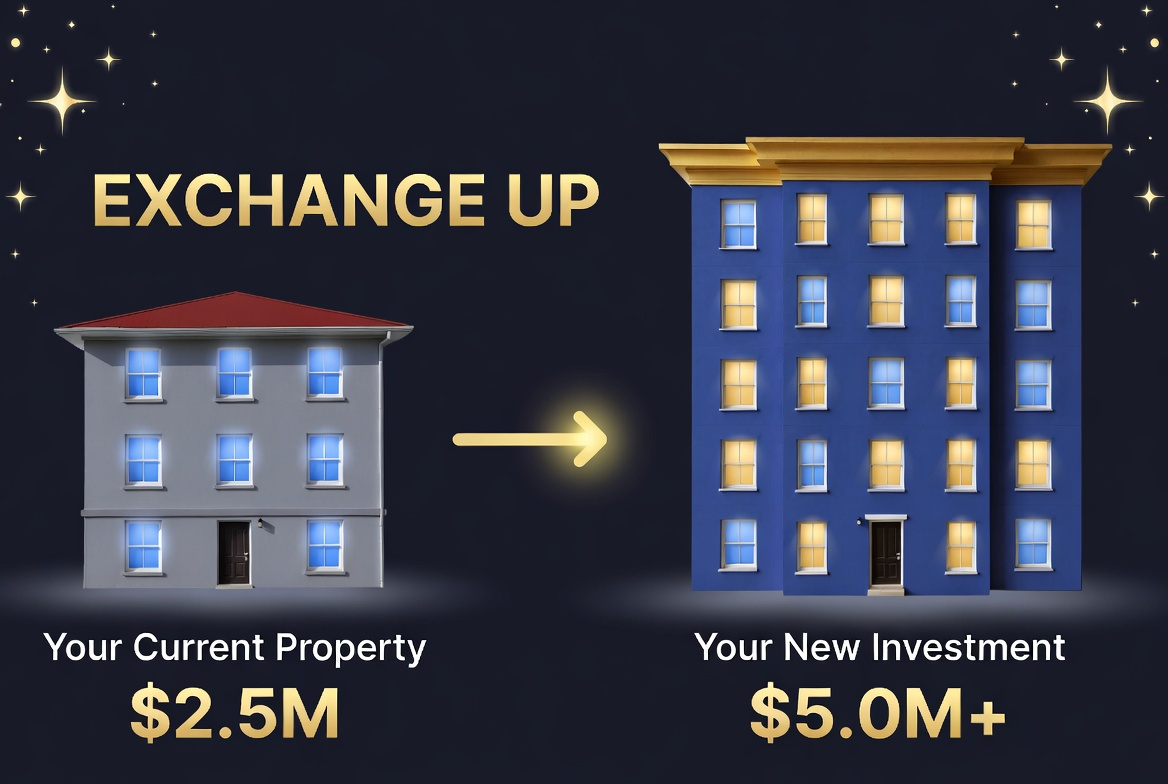
A 1031 exchange, named after Section 1031 of the Internal Revenue Code, lets you sell an investment property and reinvest the proceeds into another "like-kind" property without paying capital gains taxes at the time of the sale. You're not avoiding taxes forever. You're deferring them.
For LA apartment building owners, the math gets real interesting. Say you bought a 10-unit in Mar Vista fifteen years ago for $1.2 million. Today it's worth $3.5 million. If you sell outright, you're looking at a combined federal and California state tax hit that could easily run $500K to $700K or more, depending on depreciation recapture and your specific situation.
A 1031 exchange lets you take that full $3.5 million and put it to work in a replacement property. No tax bill at closing.
That's why this tool is so popular among multifamily owners across Los Angeles.
The Rules: Timelines and Requirements for a 1031 Exchange
Here's where things get specific. The IRS doesn't give you a ton of wiggle room.
The 45-Day Identification Window
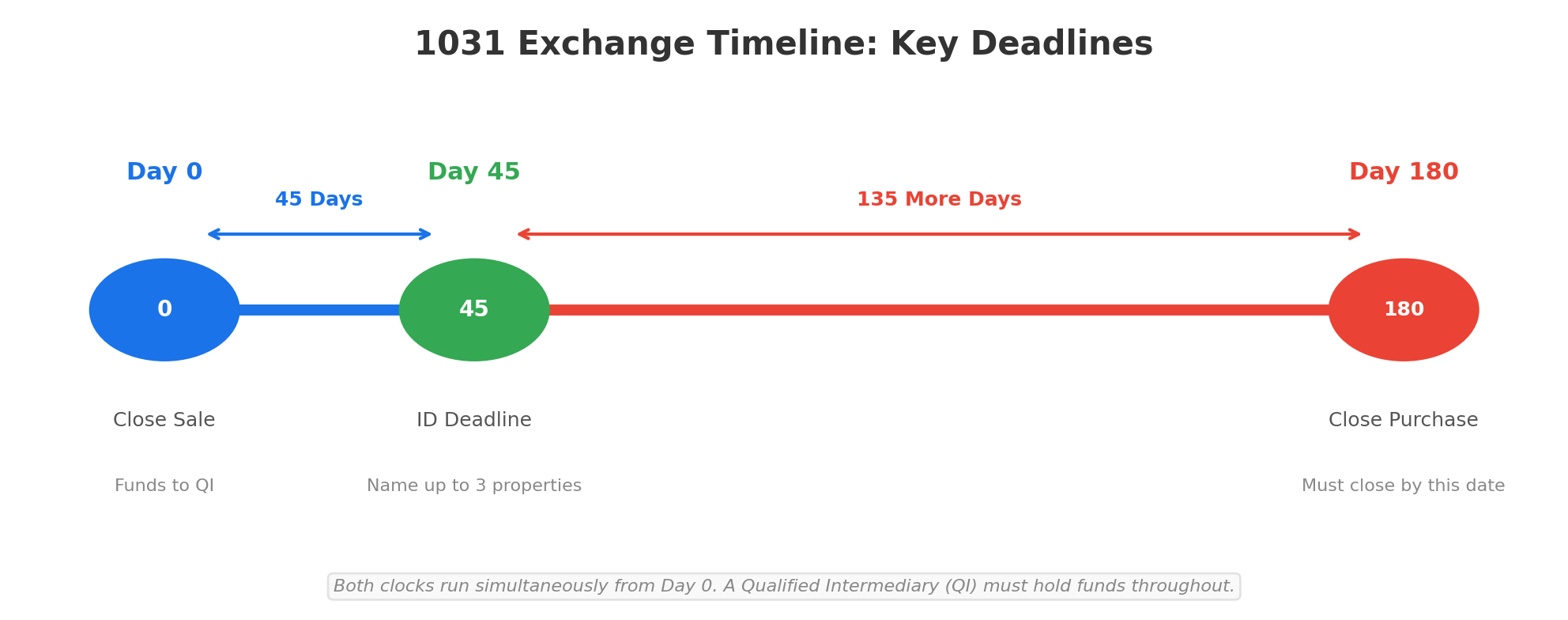
Once your property closes (the "relinquished property"), you have exactly 45 calendar days to identify potential replacement properties. Not business days. Calendar days. Holidays count. If day 45 falls on a Sunday, tough luck.
You can identify up to three properties with no restrictions on value. There's also a 200% rule (total value of identified properties can't exceed 200% of what you sold) if you want to name more than three, but most owners stick with the three-property rule to keep things clean.
The 180-Day Closing Window
You have 180 calendar days from the sale of your original property to close on the replacement. This clock starts on the day your building sells, not when you identify. So really, you have 135 days after identification to get a deal done.
Like-Kind Requirement
Good news: "like-kind" is broader than most people think. You can sell a 12-unit apartment building in LA and buy a retail strip center in Phoenix. You can exchange into a single-tenant industrial building in Dallas. As long as both properties are held for investment or business use, you're generally fine. Talk to your tax advisor about your specific scenario.
Equal or Greater Value
To fully defer your taxes, the replacement property needs to be equal to or greater in value than what you sold, and you need to use all the proceeds. If you pull cash out (called "boot"), you'll owe taxes on that portion.
Common Mistakes LA Apartment Owners Make with 1031 Exchanges
I've watched owners blow exchanges that should have been straightforward. Here are the biggest pitfalls:
Starting Too Late
The 45-day identification window goes fast. If you wait until your building is in escrow to start looking at replacement properties, you're already behind. Smart owners start their replacement property search while their building is still on the market. If you want to know what your building is worth before listing, request a free BOV. It's the first step in planning your timeline.
Not Using a Qualified Intermediary
You cannot touch the money. Period. The sale proceeds must go directly to a Qualified Intermediary (QI), a third party who holds the funds until you close on your replacement property. If the money hits your bank account, even for a day, the exchange is dead. Pick a QI before you list.
Chasing Yield Out of State Without Doing Homework
A lot of LA owners look at buildings in Texas, Arizona, or Nevada and see higher cap rates. That's real. Stabilized multifamily in Los Angeles typically trades in the 5.25% to 6.0% range, while value-add deals sit around 4.25% to 4.75%. Markets in the Sun Belt can look a lot juicier on paper.
But rent growth, tenant quality, property management infrastructure, and landlord-tenant law all vary. Don't chase a number. Understand the market you're buying into. If you want to compare what your current building looks like against the broader LA rental market, that context helps you make a smarter decision.
Forgetting About Debt Replacement
This one catches people off guard. If you sell a building with a $1.5M mortgage, you need to take on at least $1.5M in debt on the replacement property (or make up the difference with cash). The IRS looks at both equity and debt. Work with your CPA on this early.
Should You Do a 1031 Exchange or Just Sell?
Not every sale needs to be an exchange. Here are a few situations where selling outright might make more sense:
- You need the cash. If you're retiring, paying off debt, or funding something personal, pulling cash out defeats the purpose of an exchange.
- You're done with real estate. A 1031 only works if you're reinvesting in another property. If you want out entirely, it's not the right tool.
- The tax hit isn't that bad. If your basis is high (maybe you bought recently), the deferral might not be worth the complexity.
- You'd rather do an installment sale. Spreading capital gains over multiple years is another strategy. Again, talk to your tax advisor.
For most long-term LA apartment building owners sitting on significant appreciation, though, a 1031 exchange is worth serious consideration. Check out our recently sold properties to see what buildings like yours have traded for.
What About Delaware Statutory Trusts (DSTs)?
DSTs have become popular with owners who want to do a 1031 exchange but don't want to actively manage another property. A DST lets you invest your exchange proceeds into a fractional share of a larger institutional property (think a 300-unit Class A apartment complex or a medical office building).
The trade-off: you give up control. You can't decide when to sell, who manages it, or how much rent to charge. And the fees can eat into returns. DSTs work for some people, but go in with your eyes open and get advice from a fiduciary, not just the sponsor selling the DST.
Planning Your 1031 Exchange: Where to Start
If you're thinking about selling your LA apartment building and using a 1031 exchange, here's a simple game plan:
- Get a realistic property valuation. Know what your building is actually worth in today's market. A complimentary broker opinion of value gives you real numbers to plan around.
- Talk to your CPA or tax advisor. They'll model the tax impact of selling outright vs. exchanging and help you understand debt replacement requirements.
- Line up a Qualified Intermediary. Do this before you go to market. Your broker or attorney can recommend one.
- Start looking at replacement properties now. Don't wait for escrow. Browse markets, tour buildings, build a shortlist.
- Work with a broker who knows multifamily. The exchange process has zero margin for error on timing. You want someone who's done this before.
Whether you're looking at your neighborhood options across LA or considering out-of-state opportunities, the key is having a plan before the clock starts ticking.
Thinking about selling your apartment building? Want to know what it's worth and whether a 1031 exchange makes sense for your situation? Get a free property valuation. No pressure, just real numbers. Let's talk through your options.
Disclaimer: This article is for informational purposes only and does not constitute tax, legal, or financial advice. 1031 exchange rules are complex and subject to change. Always consult with a qualified CPA, tax attorney, or financial advisor before making any decisions about your specific situation.