Favia Investment Group | Market Insights
Santa Monica's Downtown Reset: Why Multifamily Buyers Should Pay Attention
By Don Favia | Updated July 2, 2026
https://www.faviainvestmentgroup.com/market-insights/santa-monica-downtown-reset-multifamily-investors
Santa Monica is not back to its old self yet. Anyone who spends time around the Third Street Promenade knows that.
There are still vacant storefronts. There are still public safety concerns. Some longtime operators have left. The street does not feel like it did during the peak years, when downtown Santa Monica could almost sell itself.
The current moment is worth watching for exactly that reason.
Markets usually start to turn while the problems are still obvious. Sellers are anchored to old pricing. Buyers are cautious. The investors willing to look at the mess directly, without pretending it is fixed, are usually the ones who find the better basis.
The city core has been through a hard cycle. Santa Monica is now making a visible push to bring it back. The work is showing up in policy, permitting, tenant recruitment, public space activation, and new residential development.
For Santa Monica apartment owners and buyers, that matters.
The Promenade Problem Is Real
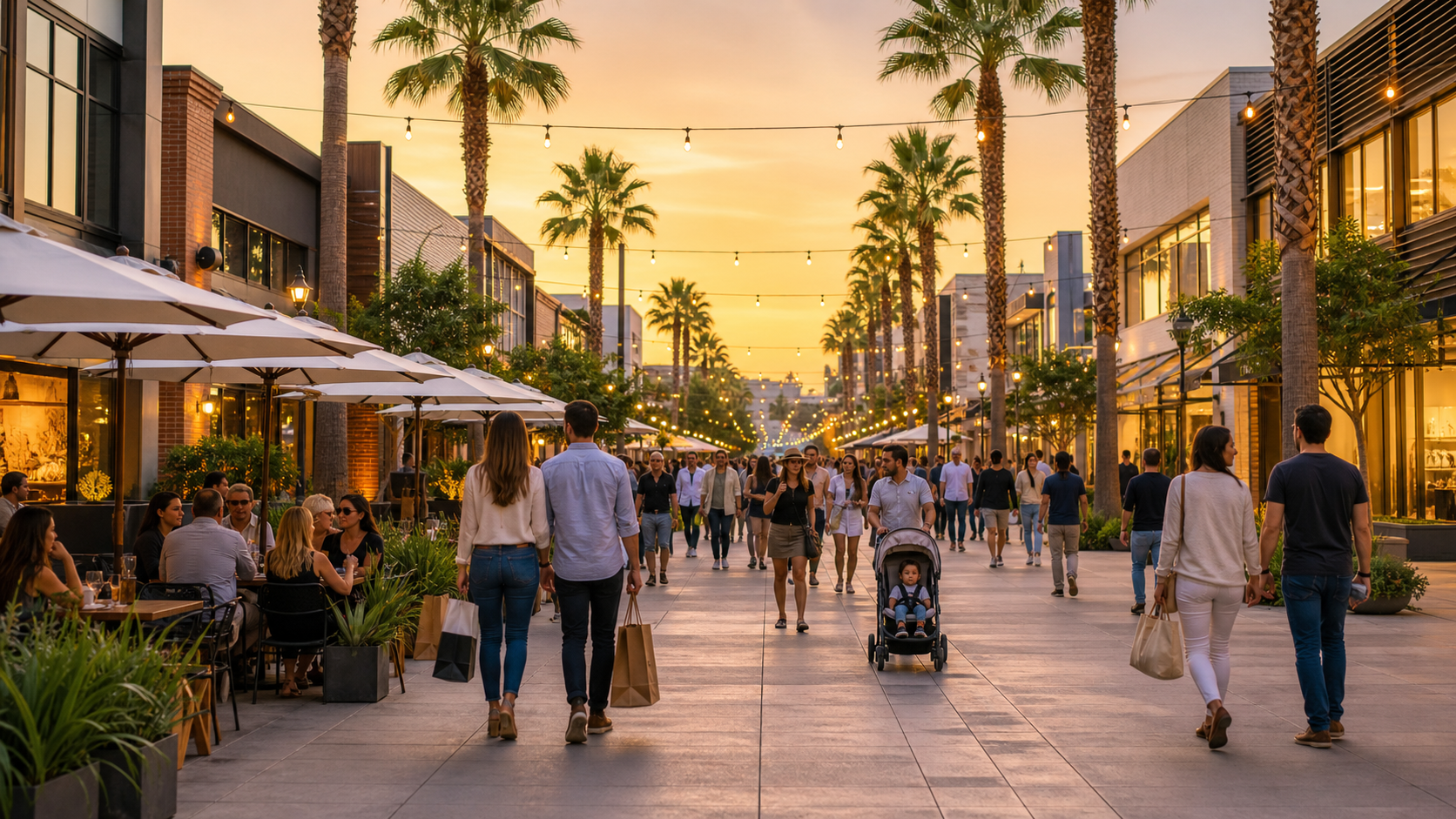
The Third Street Promenade was once one of the strongest pedestrian retail districts in Southern California. It had tourism, beach traffic, restaurants, national retailers, local tenants, and the kind of energy that made nearby apartment buildings feel like they were sitting next to a permanent demand engine.
Retail started weakening before COVID. The pandemic accelerated it. Office usage changed. Tourism took time to recover. Public safety became a larger concern. Permitting and operating costs frustrated business owners. The result was a downtown that still had Santa Monica’s bones, but not the same confidence.
The beach did not move. The Expo Line did not disappear. The residential base is still affluent. The walkability is still real. The question is whether the city can make the core feel active, safe, useful, and investable again.
That is the local layer behind the broader Santa Monica multifamily market: pricing, rent trends, and cap rates still matter, but neighborhood confidence shapes how buyers talk about a building.
For the first time in a while, Santa Monica appears to be attacking the problem from several directions at once.
What Santa Monica Is Actually Doing
The most visible change is the new Entertainment Zone on Third Street Promenade.
Downtown Santa Monica says the program allows adult beverages purchased from participating businesses to be consumed within the Entertainment Zone on Fridays, Saturdays, and Sundays from 11 a.m. to 10 p.m. The zone runs along the Promenade from Broadway to Wilshire Boulevard.
The Entertainment Zone will not solve downtown by itself. It does show the city is willing to try something more flexible.
Santa Monica is trying to make the Promenade feel more social, more flexible, and more event-driven. The old version of the Promenade was built around retail shopping. The next version probably has to be built around food, entertainment, local use, visitors, and reasons to stay after dinner.
DTSM’s business recruitment material points to several changes that matter for operators: nearly all commercial uses allowed by right on Third Street Promenade without a conditional use permit, no minimum parking requirements for new businesses, a more streamlined alcohol permit process, expanded signage options, reduced outdoor sidewalk dining fees, and a waived city wastewater capacity fee.
None of that is glamorous. It may be more important than the headlines.
Santa Monica has had a reputation for making business harder than it needed to be. If the city is serious about cutting time, cost, and uncertainty for operators, that is a real shift. Restaurants, cafes, entertainment concepts, and service tenants need velocity.
For multifamily owners, this matters because downtown retail is not just retail. It is renter psychology.
Tenants notice whether the neighborhood feels alive. They notice whether they can walk to dinner. They notice whether the coffee shop is open, whether the street feels safe, and whether there is a reason to invite friends over on a Saturday afternoon.
Rent demand is not driven by one coffee shop or one restaurant. But neighborhood feel matters, especially in a market where tenants are paying a premium to live near the beach and the city core.
The Data Shows Recovery, But Not A Full Comeback
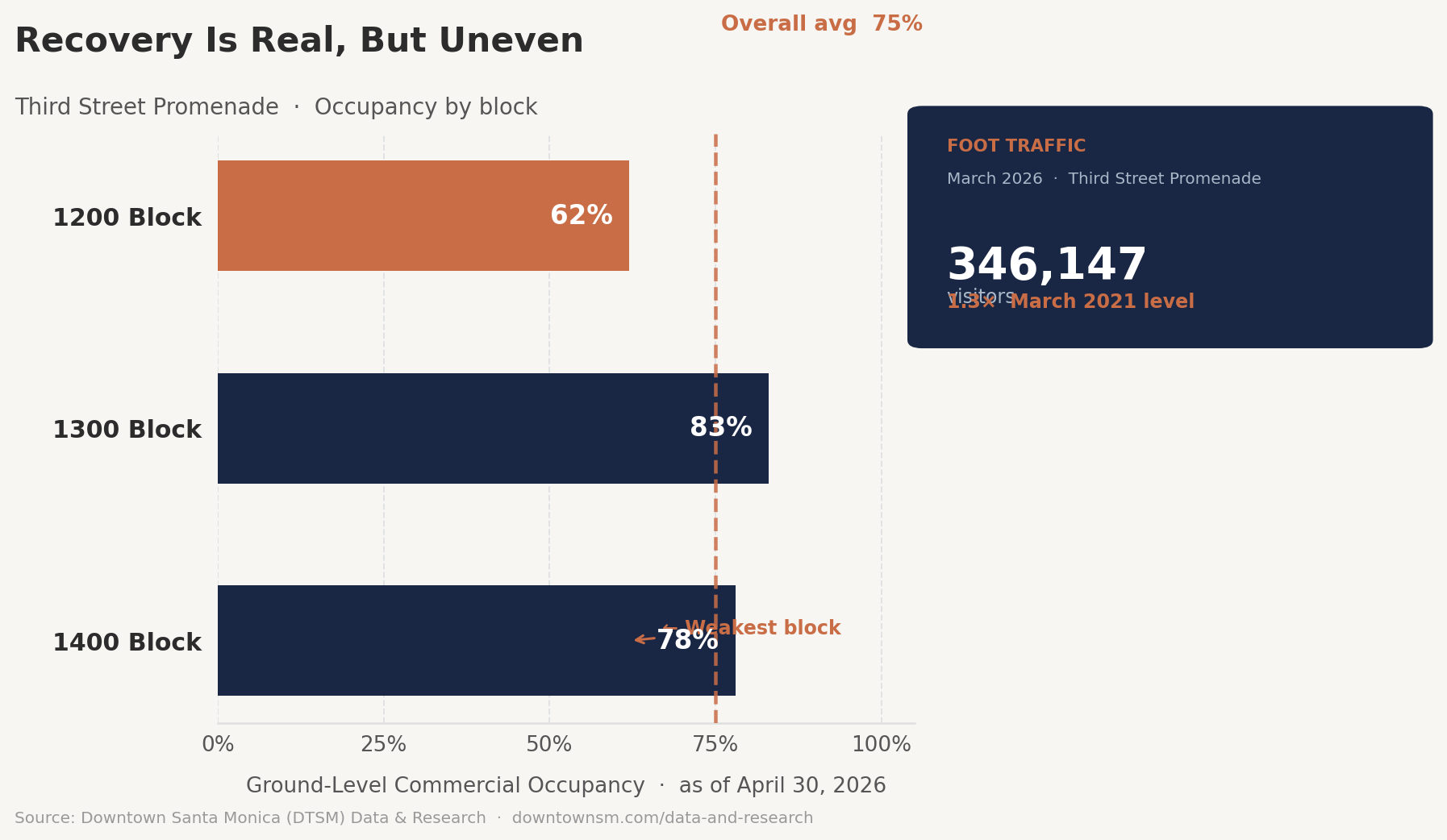
Downtown Santa Monica’s own data shows progress. It reported 346,147 visitors to the Third Street Promenade in March 2026, which was 1.3 times the March 2021 level. It also reported that ground-level commercial occupancy on the Promenade was 75% overall as of April 30, 2026.
Those are meaningful numbers.
DTSM’s same data shows why this is still a recovery story, not a victory lap. It reported that the 1200 block was only 62% occupied, compared with 83% on the 1300 block and 78% on the 1400 block.
The real read is more nuanced: recovery is happening, but it is uneven.
The business opening data is also encouraging. DTSM reported 26 business openings in 2024 and 35 in 2025, a 34% year-over-year increase.
Good signal. Still not a final answer.
At the same time, The Misfit, one of downtown Santa Monica’s longtime food and beverage operators, closed in April 2026 after 15 years. That kind of closure matters. Even strong concepts can struggle if the surrounding environment is not working.
On the other hand, new concepts are still choosing downtown Santa Monica. Holy Basil opened a Santa Monica location in late 2025. A branded Teenage Mutant Ninja Turtles pizzeria opened on the Promenade in June 2026, bringing a more experience-driven restaurant concept to the core.
The mix tells the story. Some legacy operators are tired. Some new operators still see upside. A reset usually looks messy before it looks obvious.
The Housing Pipeline May Be The Bigger Story
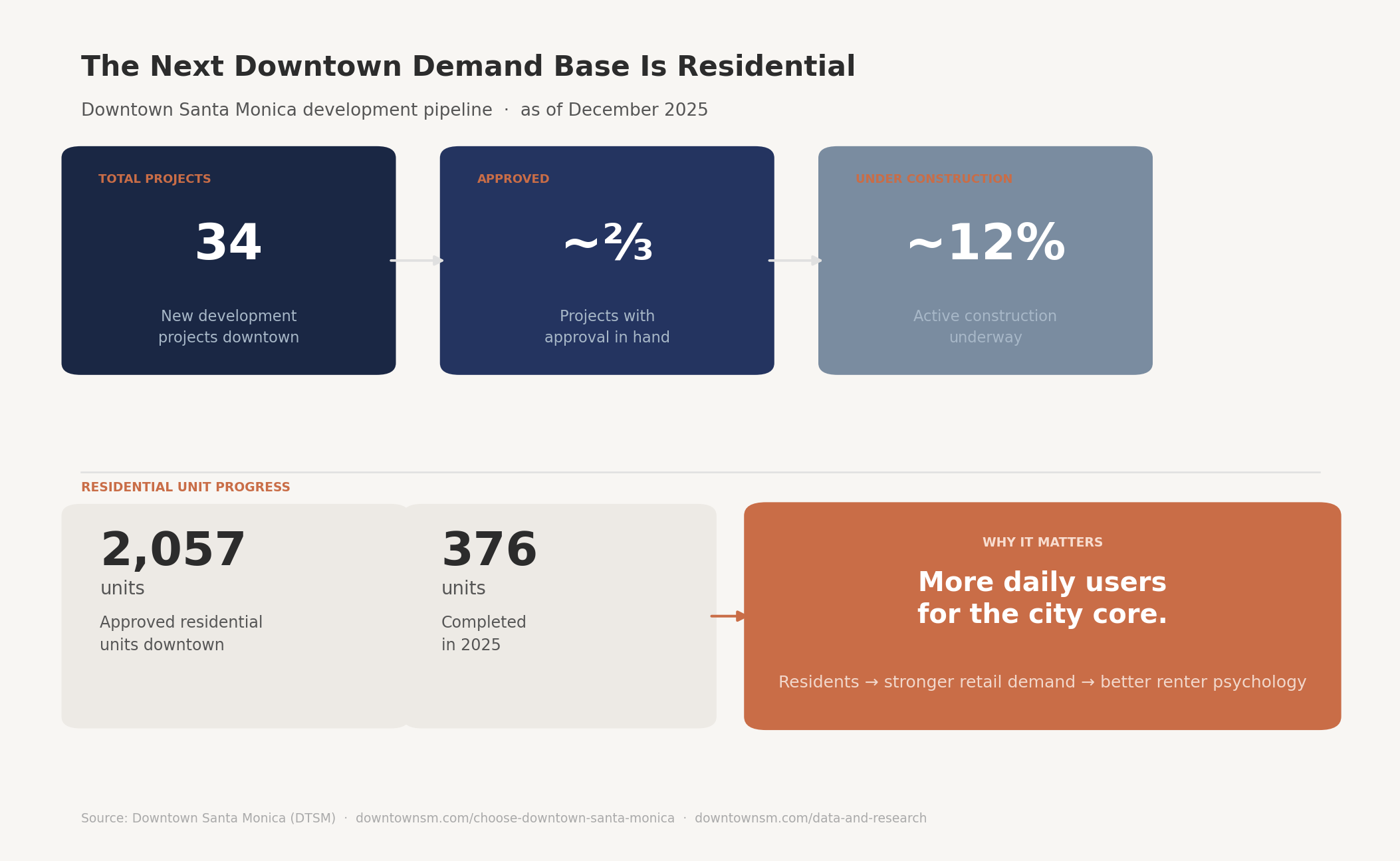
DTSM says there are 2,057 approved downtown residential units, including 376 completed in 2025. It also reported 34 new development projects in Downtown Santa Monica as of December 5, 2025, with roughly two-thirds approved and about 12% under construction, according to DTSM.
Downtown Santa Monica cannot depend only on tourists and office workers.
The stronger version of the city core needs more daily users. More residents. More people walking to dinner on a Tuesday. More people using the grocery store, coffee shop, gym, and restaurants because they live nearby.
That shift would make the district feel less like retail and more like a real neighborhood.
New supply can create competition for existing apartment owners in the short term. Over time, more residents downtown can also strengthen the core. It makes the neighborhood more useful. It gives retail tenants a better customer base. It gives the city more reason to keep investing in safety, cleanliness, programming, and transportation.
For owners of older multifamily buildings, that is worth paying attention to.
Why Buyers Should Be Paying Attention
Santa Monica has not lost its long-term advantages. It is still one of the hardest places in Los Angeles County to replicate. It has coastal demand, high barriers to entry, a deep renter base, strong incomes, and global name recognition.
Pricing psychology has changed.
Buyers are not paying peak-year enthusiasm for every Santa Monica building right now. Capital is more careful. Insurance, debt costs, rent control, and operating expenses all matter. Downtown uncertainty adds another layer of hesitation.
For buyers who can be patient, the setup is more interesting than it was a few years ago.
If a buyer believes Santa Monica’s city core can improve over the next several years, today’s discomfort may be part of the opportunity. The goal is not to buy after the comeback is obvious. The goal is to buy when the issues are still visible and the market is still discounting them.
Most deals still will not work.
The underwriting still has to be disciplined. Current income, Santa Monica rent control, deferred maintenance, financing, and basis matter more than the story.
For the right buyer, the downtown reset is worth tracking closely. It does not guarantee appreciation. It does affect neighborhood perception, and perception is one of the quiet forces behind long-term apartment demand.
If the Promenade becomes more active, if public safety improves, if new food and entertainment tenants stick, and if the housing pipeline delivers, then the core can start to feel different.
The buyer thesis is simple: get the basis right while the recovery is still uncomfortable to underwrite.
What Owners Should Take From This
If you own near downtown, your building’s value is tied partly to how the city core feels. Not directly on a spreadsheet every month, but in the way renters, buyers, lenders, and appraisers talk about the area.
When the Promenade feels weak, buyers use that in negotiations. When the core starts to feel active again, owners get some of that confidence back.
You should not wait forever for the perfect market. You should know where your building sits in the cycle. A current broker opinion of value is the cleanest way to separate market narrative from actual buyer math.
Some owners may be better off holding through the recovery. Some may use the improving narrative to create a better sale window. Others may find that the current buyer pool is more serious than it looks, especially if the asset has clean operations or a strong location near the city core.
If you are weighing a sale, the same preparation rules still apply: rent roll, expenses, Measure GS exposure, and pricing discipline. I walk through that process in the guide to selling a Santa Monica apartment building.
The right answer depends on the building.
The Bottom Line
Santa Monica’s downtown reset is still early. It is uneven. It is not guaranteed. Anyone pretending the Promenade has already returned to its former strength is skipping the hard part.
The promise is real, though.
The city is trying to make downtown easier to operate in. DTSM is recruiting businesses. The Entertainment Zone gives restaurants and bars a new tool. New housing adds future daily users. Recent tenant activity suggests operators are still willing to bet on the location.
For patient multifamily buyers, that is the opening. The problems are visible. Pricing is more sober. The long-term fundamentals are still difficult to replace.
If you own a Santa Monica apartment building and want to understand how the downtown reset affects your value, request a valuation from Favia Investment Group. Don Favia has worked in West LA multifamily for 20 years and can help you compare today’s buyer demand against where the market may be heading.
Request a valuation or call Don at 424-377-6002.
Sources
- Downtown Santa Monica Entertainment Zone: https://www.downtownsm.com/entertainment-zone
- Downtown Santa Monica Data and Research: https://www.downtownsm.com/data-and-research
- Downtown Santa Monica business recruitment data: https://www.downtownsm.com/choose-downtown-santa-monica
- Downtown Santa Monica Promenade 3.0 background: https://www.downtownsm.com/news/6921/promenade-30-downtown-santa-monica-experiments-with-the-world-class-outdoor-space-asks-for-public-feedback
- The Guardian, November 22, 2025: https://www.theguardian.com/us-news/2025/nov/22/santa-monica-crime-safety
- Eater LA, The Misfit closure: https://la.eater.com/los-angeles-restaurant-news/301613/the-misfit-santa-monica-restaurant-closing
- Eater LA, TMNT Pizzeria opening: https://la.eater.com/restaurant-openings/304268/teenage-mutant-ninja-turtles-pizzeria-opening-santa-monica
- Eater LA, Holy Basil Santa Monica: https://la.eater.com/los-angeles-restaurant-news/296471/holy-basil-thai-restaurant-opening-santa-monica
Related Reading
- Santa Monica Multifamily Market Update 2026
- Why Santa Monica Rent Softness Has Buyers Paying Attention
- How to Sell Your Santa Monica Apartment Building
- Santa Monica Rent Control Guide
This is for general informational purposes only. Consult with your CPA, tax advisor, and/or attorney for guidance specific to your situation.